
The challenge
How do we take a process built around in-person design centers and turn it into a digital experience?
The objective
A simpler way for homebuyers to visualize and select finishes, while giving builders a lower-cost alternative to in-person design centers.
I created a white-label platform that lets buyers explore finishes, visualize their selections, and move through the customization process remotely. For builders, it creates a more efficient alternative to costly in-person design centers. A scalable design system and token architecture make it possible to support different brands without rebuilding the experience from scratch.
View website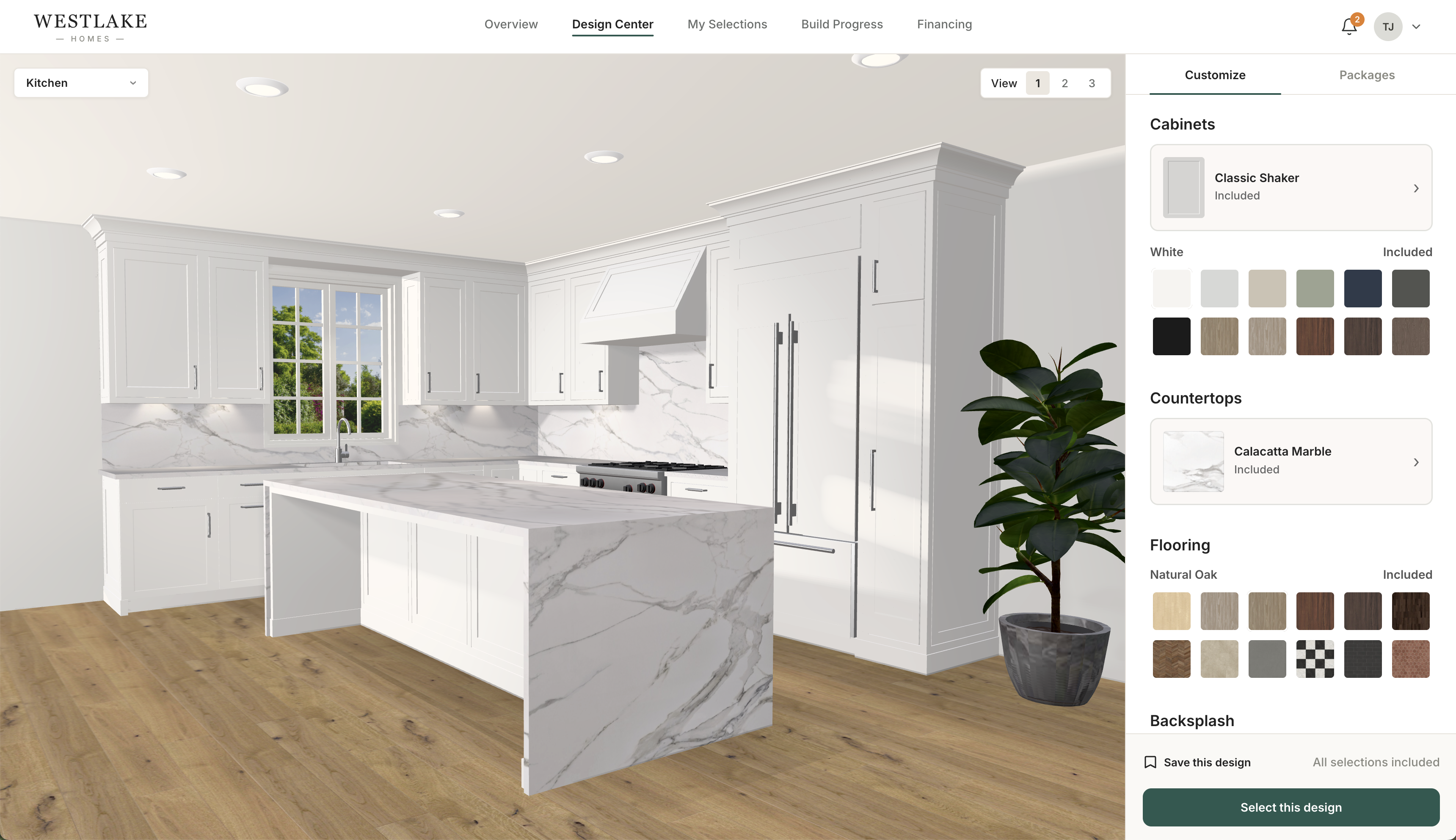
From prototype to system
I started by building the experience as a working prototype, using AI-assisted tools to move quickly through iterations. That let me test the product in context and see which patterns were actually worth standardizing. Those patterns started to define the foundations of the design system.
Those foundations became a token architecture in Figma, organized across primitive, semantic, and component layers. I used Style Dictionary to transform the tokens into CSS and TypeScript, creating a direct connection between the design system and the component library. I then built and tested the components in Storybook, giving developers one place to find, review, and implement them. From there, I focused on how the system would be documented and governed so it could grow without losing consistency.
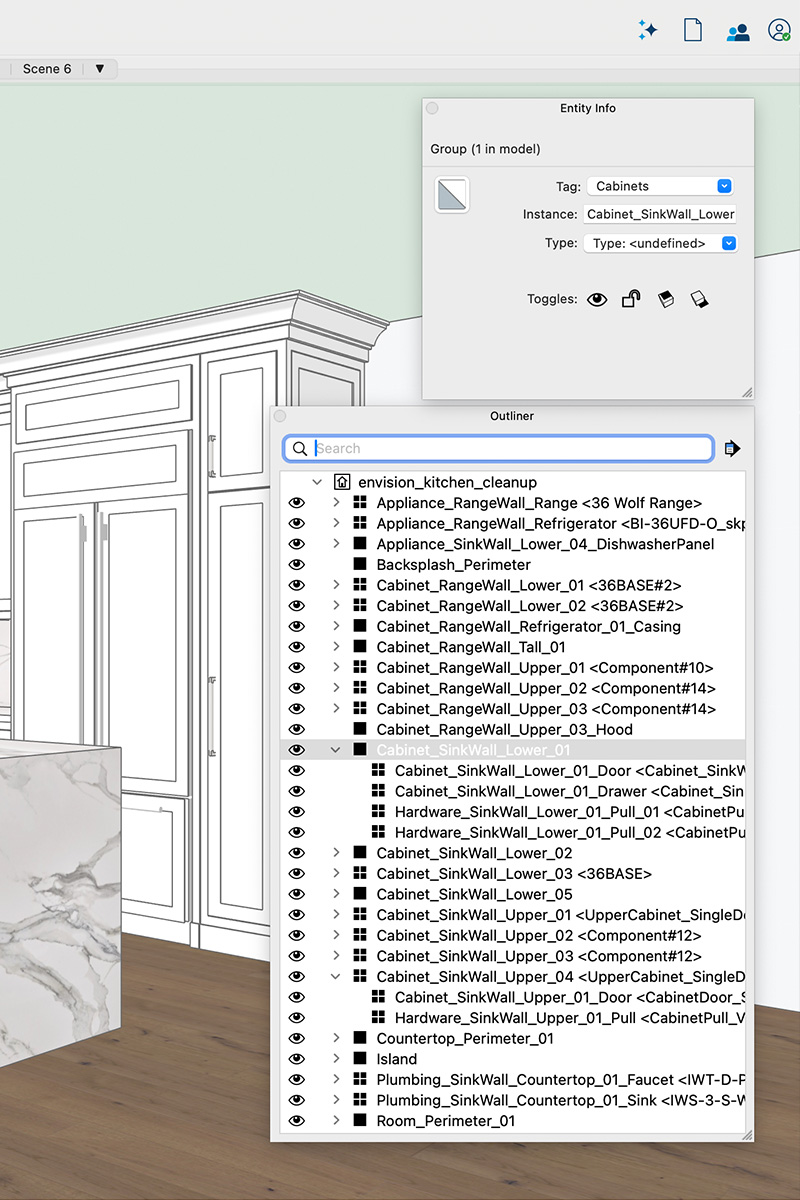
I applied the same systems thinking to the 3D models, creating a consistent naming structure in SketchUp so cabinets, surfaces, fixtures, and materials could be identified and mapped to finishes in a predictable way across builders, floor plans, and home models.
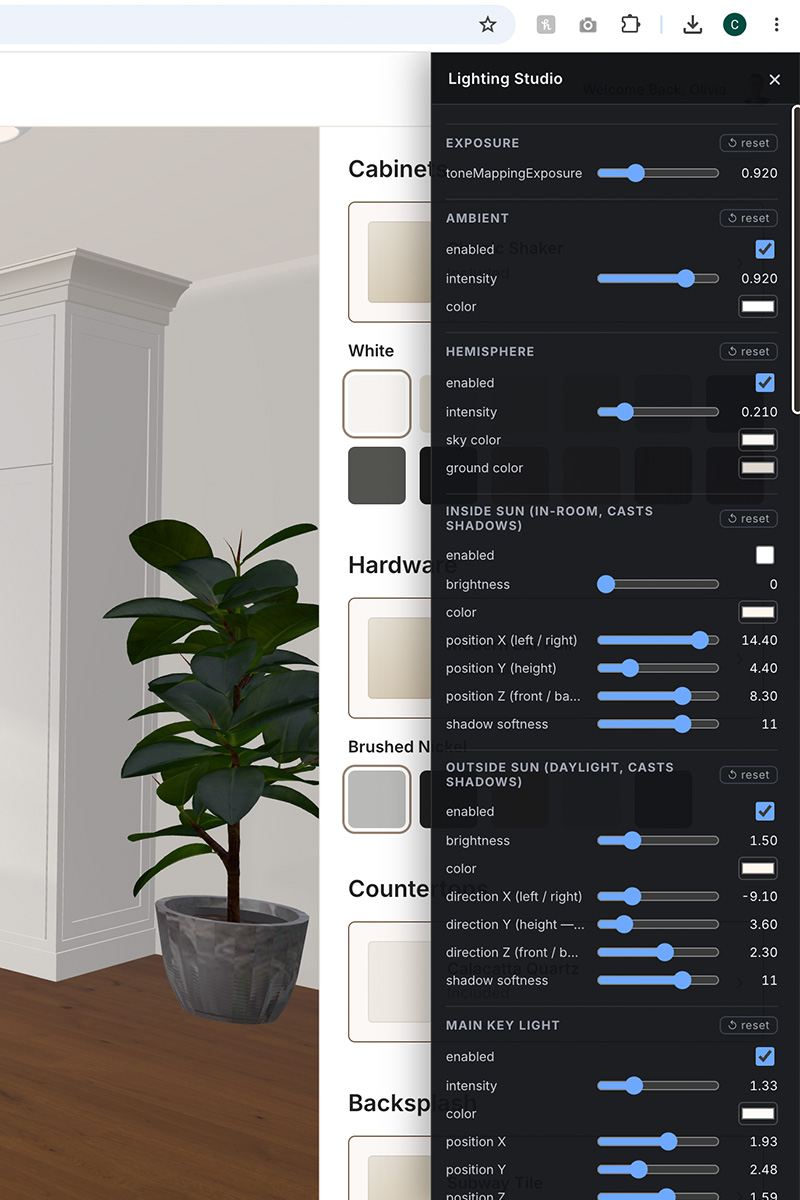
I also built a custom lighting studio to keep the lighting consistent across any 3D system.
System governance
I built a dedicated Design Center to make the system easier to understand and use. It brings together the foundations, components, implementation guidance, and governance in one place so the system can scale without losing consistency.
View the Design Center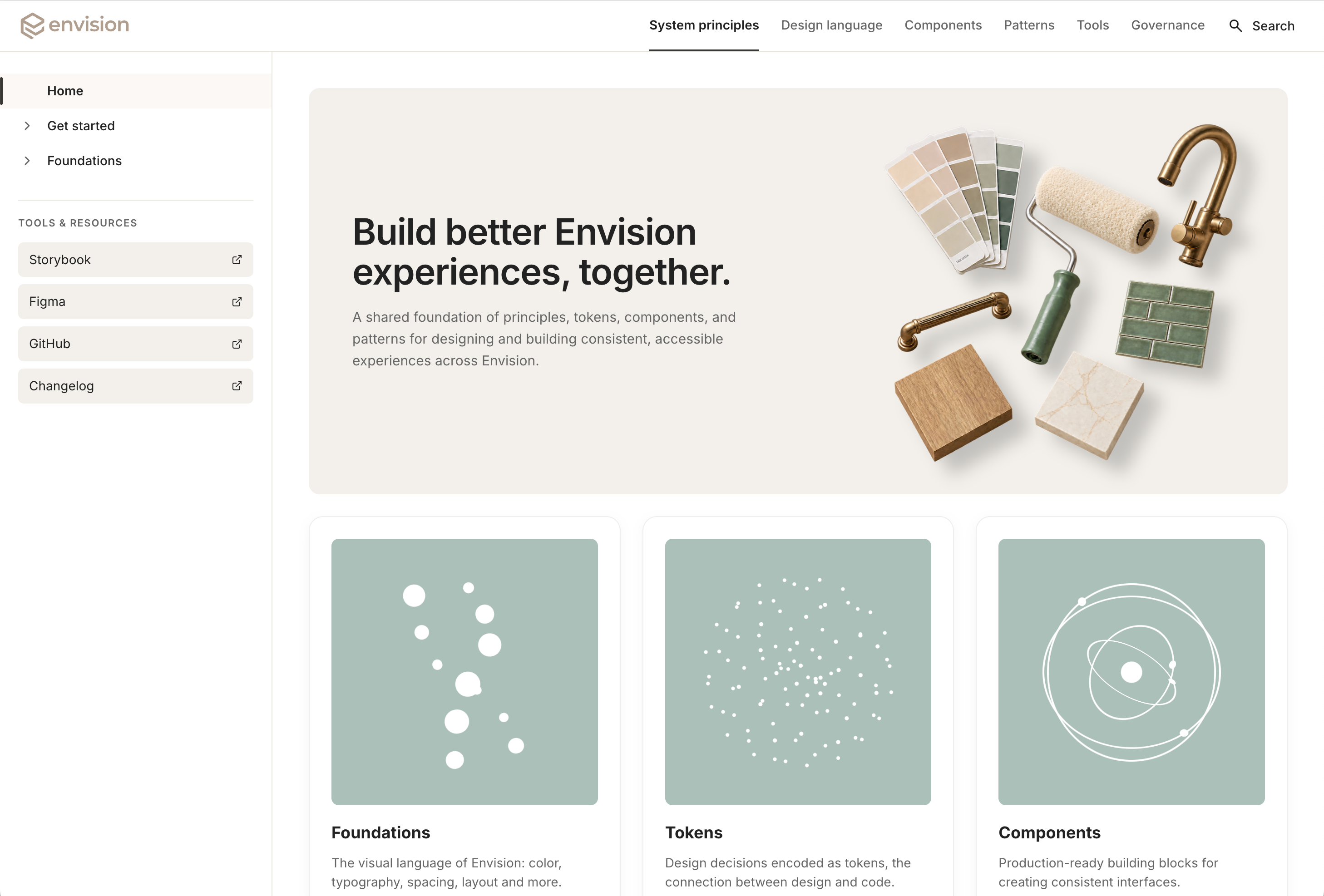
The outcome
A product like Envision would have once required a much larger team, budget, and timeline to even prove out. New tools changed that equation. I was able to take the idea from concept to working product, then build the design system and infrastructure around it. More importantly, it let me push product thinking much further before engineering investment was required, so decisions could be tested, refined, and proven with far less risk.